Labels

Showing posts with label Research. Show all posts

Saturday, 16 November 2013

Research: Opening credits and typography

What are opening credits?

Opening credits are text presented to the audience saying all the production roles and who was starring in the film and what roles they took in the production; this involves who directed it, who acted in it, who edited it and any other roles. Opening credits are where people who took part in the production of the film get credited for their work. This can be used to promote the film as people may recognise famous actors, actresses, directors and so on; encouraging them to watch the film.  This is often accompanied by sound which is used to create tension amongst the audience. The opening credits should give some inside of what the film is about but not too much; this keeps the  audience guessing. The audience may be introduced to a character in the opening credits but question who exactly they are. Opening credits should allow the audience to familiarise themselves with the film and the characters but not give away too much information so that I encourages them to watch the full film.

What is typography?

Typography is the style writing is presented to the audience. This involves font, size and colour of text. Thrillers normally use edgy font. They also use black an red colouring to signify blood and danger. This creates anxiety amongst the audience and allows them to prepare for the fear they expect to feel throughout the film.


The opening credit for 'Se7en' uses chilling typography on its opening credits. This allows the audience to clearly identify that the film is a thriller right from the beginning. The typography makes the audience feel slightly uncomfortable which informs them that they might find the film slightly disturbing. From learning about typography I am now able to think about what to use in my own thriller. I know that I would like to use black and red and font that resembles blood.

Sunday, 3 November 2013

Research: Age certificates

The BBFC
They are  there to decide whether films can be released or should be banned or censored; they also decide what age certificate it can be in order to protect the audience from anything harmful or upsetting. They are important because they protect adults and more importantly children. With age certificates parents are able to identify what film is and is not approcriate for their child to watch.

Here are a list of age certificates in the uk:

    Ice Age (2002) Poster
  • U - The film is open to all ages to watch; for example 'Ice Age'

    Diary of a Wimpy Kid (2010) Poster
  • PG - open to all ages from about 8 years old, but parents are advised to decide whether it is suitable for a younger child; for example 'Diary of a wimpy kid'


    Batman Begins (2005) Poster
  • 12 - No one younger than 12 must watch this film
  • 12A - No one younger than 12 must watch this movie unless accompanied by and adult; for example 'Batman Begins'
Final Destination 5 (2011) Poster
  • 15 - No one under 15 must watch a 15 rated film; for example 'Final Destination 5'


Texas Chainsaw 3D (2013) Poster
Spider-Man (2002) Poster
  • 18 - No one under the age of 18 must watch an 18 rated film; for example 'Texas chain saw massacre 2013'


The 12A certificate came across when people complained about super hero films such as 'Spiderman' being too violent for children to watch. But at the same time they thought it was wrong for children who are fans of teh characters to not be able to watch the film. They then decided to compramise and made a new age certificate '12A' so that it was left in the hands of parents to decide whether or not that think it is okay for thair child to watch it.


Thrillers or often given a 15 age rating because it contains content that is not suitable for people younger than 15 but thrillers tend to be less disturbing than horror films which are ofen given an 18 age rating. Because of this I am considering giving my own thriller a 15 age rating.

research: censorship

What is censorship?

Censorhsip is when a film is revised due to the content it shows.

What does it mean when a film is banned?

The film is taken away from cinema viewing completely due to idecent, harmful or offensive material.

What does it mean when a film is cut?

The film is edited and parts have been taken out.

Who are the 'BBFC'?


The 'BBFC' stands for the 'British Board of Film Classification'. There are there to decide whether films can be released or should be banned or censored; they also decide what age certificate it can be. Their role is important because they protect the public from anything offensive or anything that can cause harm.

Why do things get censored?

Things get censored because they are harmful and offensive to the public. this involves:

  • Extreme violence
  • Child exposure
  • sexual violence
  • sexual content
  • torture scenes
  • strong language
  • offending culture, face, religion or true events
  • nudity
  • drug abuse
  • bad influence on children
  • graphic representation and realism
  • shock
There is a difference between a film being cut and banned. When a film is cut it has indecent parts edited out and is then able to be released; whereas when it is banned the whole film is rejected from the board and cannot be released.
An example of a banned film is 'The human centipede 2'. It was banned for its indecency and not even the trailer can be viewed.
An example of a cut film was 'The exorist' which was labelled the scariest movie of all time. This film involved religion which was controversial and after being banned it was then censored and released in 1990; 17 years after it was made.

There is a debate between Forna and Kermode about whether or not films should be censored. Forna is for censorship and believes that without censorship films can influence negative behaviour in the audience. For example, using racial words and themes may influence racism in the audience. Also, social stereotypes may offend social groups and illegal acts presented in film can enourage the audience to behave this way.
Kermode, on the other hand, disagrees with censorship. He believes that people should be able to figure out whats right for wrong and not be influenced by anything negative they view. He also argues that people should be able to tell whats real from whats not and should have no reason to feel anything bad about a film that is not real.

I now know what types of content is not be used in my thriller, such as; extreme violence, sexual content and strong language. This will now provent me using any inappropriate footage in my own thriller.

Monday, 28 October 2013

Research: Narrative theory

What is a narrative?

A narrative is a brief description of the story being told and the events that may occur throughtout the film.
A elements that allow the audience to find meaning are; characters, genre, structure and denotation and conotation.

Propp -

Propps theory is based on characters and fairytales. Propp believed that folk tales were about the same basic struggles and therefore the same characters. He then decided on 7 characters from fairytales that can relate to media. These are:

The hero - A character that seeks for better things.
The villain - Who opposes the activety or blocks the hero's quest.
The donor - Who provides an object with magical properties.
The dispatches - Who sends the hero on their quest via a message.
The false hero - Who distrupts the hero's success by making false claims.
The helper - Who aids the hero.
The princess - Acts as the reward for the hero and the object of the vallain's plots.
Her father - Who rewards the ehro for his effort.

Propp analysed faiytales and slip them up into a narrative structure:


  1. Preparation
  2. complication
  3. transference
  4. struggle
  5. return
  6. recognition


Todrov -

Todrov's theory is based on a narrative having a clear start, middle and end structure. This is structured by having an equilibrium, disequilibrium and new equilibrium:


  1. Equilibrium - Characters appear stable in the beginning.
  2. Disequilibrium - Something disrupting happens and a change occurs which needs to be resolved. 
  3. New equilibrium - Usually disruption is sorted and the narrative is closed.
An example of this is in the opening of 'Halloween'; the equilibrium is when the 2 teenagers are home alone on halloween and the backdoor is left open when they go upstairs. The disequilibrium is when someone enters the house and picks up a knife. The boyfriend then leaves the girl home alone and someone dressed up as a clown comes in and stabs her to death. The new equilibrium is when the mask is taken off the murderer and we see that it is her little brother. 

Aristotle -

Aristotle said that the beginning, middle and end must relate to eachother. He said that this would arouse emotion from the auidence and is mainly used in tragedy films.

Barthes - 

Barthes said that a narrative can be defined by using the 5 following things:

  1. Action - Understanding and resolving the understood by the action seen.
  2. Enigma - Teases the audience by presenting a puzzle or riddle that needs to be solved.
  3. Symbolic - Connotation
  4. Semic - Denotation
  5. Culture understanding - Events which can be recognised as being part of a culture.

Wednesday, 23 October 2013

Research: Sound

Sound in film

Sound in film is used to create an understand for the audience and to create more meaning about the character and emotions.

There are many different types of sounds, for example:

  • Diegetic Sound
Sound which is part of the film would. It is sound that is from something visible or present on scene. For example, dialog.

  • Non-Digetic Sound
Sound which does not make sense to the film world. For example, soundtrack to a film.

  • On Screen Sound
You can see where the sound is coming from. For example a radio

  • Off Screen Sound
You can have sound but cannot see where it is coming from, but it makes sense to the film world. For example, traffic sounds.

  • Parallel Sound
Where you hear in a film what is expected. For example, a scene with children playing on a beach the parallel sound would be laughter, talking and the see.

  • Contrapuntal Sound
Is when the sound does not match the expectations of what you are viewing. For example, in jaws the scenes at the beach are accompanied by the theme tune.

Research: Mise en scene - Setting and Iconography

Setting
What is setting?

Setting is when and where a film takes place. The setting of film is important because it sets the atmosphere and will help make the audience clear of the theme; aswell as organising events and keeping a clear time structure thoughout, allowing them to follow a clear narrative.

Different types of films are likely to have different types of settings. The setting is determind by the theme, genre and sub-genre that the film has to follow. It is important that the setting is appropiate for the sub-genre of the film as one setting may sutible for one sub-genre of a thriller and not another sub-genre of a thriller.

Typical thriller settings:
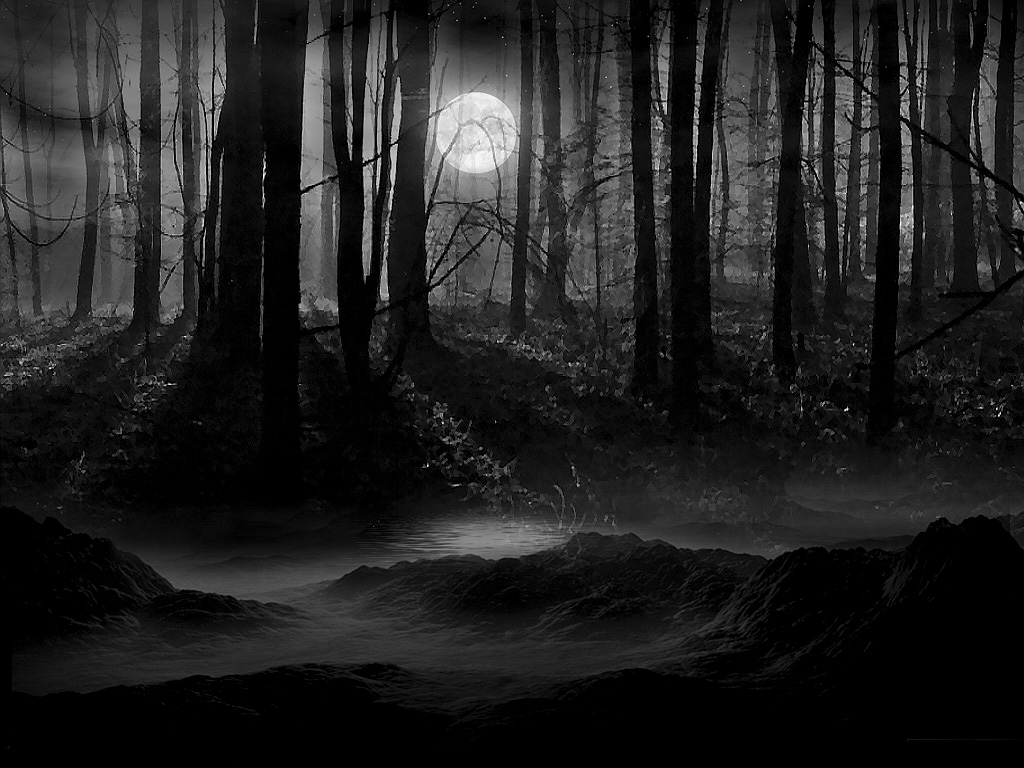
  • Woods/Forest - These areas tend to be very isolated and there is no clear exit. It is full of shadows and has low key lighting which creates an airy atmosphere. This helps create the emotion of fear into the audience. This is often used in supernatural thrillers and Mystery thrillers.


  • Warehouse - This is normally maze like and gives the idea of the victim/protagonist being trapped. This creates anxiety amoungst the audience as the victim/protagonist fights their way through the warehouse looking for a way out. This often used in psychological thrillers and action thrillers.


  • Large house - This image is taken from 'Scream'. A large house makes the audience feel slight discomfort as a home is considered to be some where safe and is used as an unsafe trapped environment int thriller films. This is often used in supernatural thrillers, religious thrillers and slasher thrillers.

  • Deserted land - This is taken from 'The happening'. Deserted land is often used in science fiction thrillers involving UFO and alien invasions. This setting is used to make the audience feel sympathy towards the victim who is isolated and far from society and any form of help.


Iconography
 
 
What is iconography?
 
Iconography is any object that causes significance to a scene. Iconography can be used to give the audience clues about what may or may not happen in the film. An example is in the scream opening a young girl is fiddling with a knife, this then ends up being the same knife she is killed with.
 
 
Typical thriller iconography:
  • Weapons, Knives, guns, axes, saws, ect - Used by the antagonist to harm or threaten the victim or used by the protagonist as defense. The type of weapon can be determind by the the type of theme and sub-genre the film falls under.
     
  • Blood - This is used is most types of thrillers, from action thrillers, to slasher films. This is used to make the audience see the scene as more realistic and really start to believe the storyline more for the duration of the film.


  • Phone - This is often used in thrillers when the victim tries to call for help and for some reason cannot get through to anyone. This makes the feel sympathy for the victim as they feel there is little hope for them.


Research: Mise en scene - costume body language and facial expression

Costume


Costume is what characters wear in a film and should be conventional to the genre. Costumes allow the audience to interpret the character and the role they are playing in the film.


Here are just a few conventional antagonist costumes:
Dark coloured clothing - The audience is aware that this character has a dark side and bad intentions.
Marks - Hides the identity of the antagonist from other characters and the audience. Humorous marks are also often used; such as clown masks. This causes discomfort amongst the audience as these types of masks are normally associated with children and fun not evil.
Hoods - Also identity of the antagonist from the audience and other characters holding suspense amongst the audience as they are anxious to see the villains identity.
Facial hair/ messy hair - This makes the antagonist look unattractive and helps to make the audience not like him. Someone that looks like they can't take her of their self looks more evil than someone who looks like that take pride in how they look.

Here are a few conventional protagonist/victim costumes:
  • Pale coloured clothing - This makes them seen innocent and will make the audience sympathise with the character.
  • Young female victim - Audience will stereotype the character as weak, vulnerable and defenceless; again making the audience sympathise and feel empathy towards the character.

Body language and facial expression
What is body language and facial expression?
The characters actions, movement and the way they carry themselves. The way characters hold themselves or act will be conventional to other films of the same genre.
Conventional body language and facial expressions of an antagonist:
  • Confident
  • Strong
  • Good posture
  • assertive
  • Calm
  • relaxed
  • emotionless or comes across intimidatingly happy
Conventional body language and facial expression of a protagonist:
  • Strong
  • worried
  • confident (less than the antagonist)
  • uncertain/unsure
  • emotional
Conventional body language and facial expression of a victim:
  • Defenceless
  • Confused
  • unsure
  • emotional
  • worry
  • moves slow as they are uncertain
 
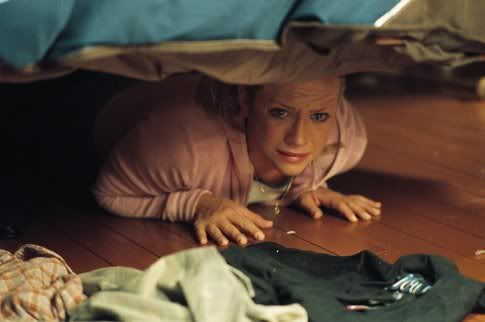
This scene of 'Prom Night' shows conventional body language, facial expression and costume. The main victim is a blond, teenage girl who is wearing pale pink. Her costume makes her seem very vulnerable and weak; along with the rest of the victims who all wear neutral colours. The girls moves around the house very slow at first with a slightly worried face; this shows her confusion and how uncertain she is feeling.
When she is under the bed we can tell by her shocked facial expression the hurt emotions she feels as she watches her mother being killed; this makes the audience feel sorry for her and sympathise.
At the end when she runs out the house in panic we finally see the antagonist who is dressed in all black and scruffy hair, as well as thick facial hair which made him seem voilent and aggressive. Throughout the seen although we couldn't see him fully it is clear that he felt no remorse for what he was doing  as his voice sounded confident and aggressive. These techniques make the audience develop a negative view of the antagonist and form a dislike towards him.


Research: Scream analysis


How is the opening sequence of Scream conventional to a thriller opening?

In this essay I am going to analyse the wide range of microelements used in the opening scene of scream that are conventional to a thriller.

In the beginning of the scene we are introduced to the victim. She is wearing light pastel colours and has blond hair. She has a pretty face with natural looking rouge lips. The audience are able to recognise the innocence of this teenage girl as she seems to fit the ‘American Sweetheart’ image. This innocent look portrays her as an easy target as she can be stereotyped as weak; the perfect victim.

The lighting starts of quite natural and the editing slow paced to help set the scene. The scene is set in her house where the lights are on as it is night. Next we see an establishing shot of the house and its surroundings. We are shown the large house which the girl is staying in. A home is somewhere we would consider to be safe; however it is surrounded by nothing but tress. The relevance of this is to allow the audience to identify the fact that the victim is completely isolated; she has nowhere to run and no one to come to her rescue. This makes audience to feel empathy for her.

We then see the use of iconography when she begins to receive phone calls and behaves naturally, showing she does not feel she has anything to fear. However, when the antagonist asks for her name  and says he wants to know who he’s looking at, we see a reaction shot, close up on her shocked facial expression as she begins to realise these phone calls are more serious than she initially thought. This allows a sudden build-up of suspense amongst the audience as they can identify something disastrous is about to occur. Another use of iconography is when she’s in the kitchen and we see her playing with a knife; ironically this is the same knife the antagonist uses to stab her to death with. When we first see her touching it the audience can connote that this knife may cause her harm.

The camera then starts panning as she slowly and cautiously around the house. As she moves around the house the camera follows her; often from behind. The house no longer seems bright as she enters areas of the house with dim, low key lighting; creating shadows around the room which connotes danger. Together these techniques may represent her being watched and followed. The shadows representing that she is not alone and is unsafe. The use of these techniques creates a build-up of tension and the audience are aware that the antagonist may appear at any time.

She starts looking the doors in panic and we see a range of close up shots on each lock; this may be significant to the audience so they can identify that she is trapped. As the conversation with the antagonist continues her face looks more and terrified. She continues to scan the room and the editing starts to move at a faster past. This starts to put the audience on edge and makes them feel anxious to see when this villain might make an appearance. The main turning point in the scene is when the victim decides it’s time to make a run to lock the front door and remaining unlocked windows. The editing pace speeds up rapidly which puts the audience on edge as they feel something ghastly may be about to

We see a point of view shot of the front door which then begins to zoom out as she begins to panic and scan the room showing the terror she is feeling. The importance of this technique is to show far away from society she is. She's completely isolated and the use of zoom may symbolize how trapped and alone she is. This may make the audience to empathise with her and sympathise for her as they feel there is little hope for the victim.

Throughout the scene she has popcorn preparing over the stove; as the scene unfolds the popcorn begins to make noise and pop. Throughout the scene the popcorn gets louder and louder and the scene gets more dramatic and editing paste gets faster. It is at the end of the scene when the antagonist murders the victim when the popcorn eventually sets fire. This use of diegetic sound is to put the audience of edge and to build up the tension as the scene goes along.  This creates more and more anxiety amongst the audience until the scene reaches a shocking end.

The opening of scream uses a range of techniques such as iconography and low key lighting; along with different camera techniques such as close up, establishing shot, panning and much more to create suspense and tension amongst the audience. All of these techniques are conventional to a thriller opening.

Sunday, 20 October 2013

Research: Narrative themes

What is a theme?

A theme is a topic that the film follows; the narrative the film is telling is based off the theme. Different themes will be found in different genres and sub-genres as the theme has to be determined by the time of film it is.

What is a genre?

A category in which a film would fall into based of its characteristics, for example; romance, thriller, action, comedy and many more.

What is a sub-genre?

A sub-genre is a division of a genre into smaller categories.


Here are a list of themes that are conventional to a thriller:
  • Revenge
  • Kidnap/hostage
  • obsession/stalking
  • Good vs Evil
  • Investigations (Whodunits)
  • Alien invasions/space
Themes are important because they provide the base for the narrative and make it clearer for the audience to understand the story. I know that by deciding on a theme for my own thriller film it will make it easier for my to develop my narrative and structure.

Saturday, 12 October 2013

Research: Mise en Scene - lighting and colour

What is mise en scene?

Mise en scene are the characteristics that are used to set the film and tell the story. There are five sections to mise en scene; lighting, setting, costume, body language and facial expression and iconography.

Lighting


Lighting helps to convey mood and atmosphere in a scene in film. It can also guide the audience's attention to a particular object, person, emotion, or gesture.  In a thriller lighting can be used to cast shadows and build tension. There are different techniques to use lighting.


  • Under lighting 
This is where light comes from below the person which tends to have a distorting effect on the character.
This can be used in a thriller to make a character look more evil and sinister. This can make the audience assume the character has a dark side and develop a negative opinion of the character.


  • Top lighting
This is where lighting comes from above; highlighting the features of a character. This often creates a glamorous look.
In this example the male character comes across heroic which makes the audience identify them as the protagonist and automatically  develop a positive opinion of them.


  • Back lighting
This is when the light source is behind the person. If little of no light is used it will create a silhouette. 
This example from the famous scene in 'Psycho' uses back lighting to hide the identity of the antagonist making the audience unclear about who the character is. This technique is often used in mystery thrillers so keep the audience guessing and engaged. 


  • Low key
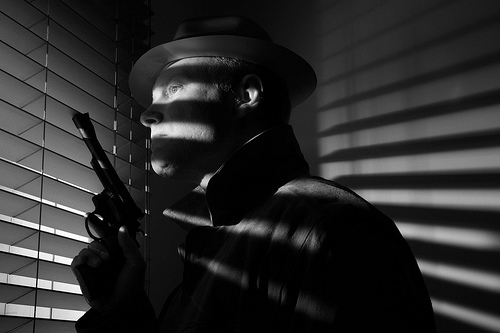
The lighting is dark with areas of light, which creates shadows. This builds up tension in a thriller and makes the audience aware that something thrilling may be about to occur; such as, an attack on the protagonist/ victim.


  •   High key
Lighting appears more natural, however, clearly brighter than natural. The use of high key lighting in this image taken from 'Se7en' allows the audience to identify the men as the protagonists. They look more heroic and the audience will have a positive view of them and identify them as 'good'. 


  • Natural
When no lighting has been added, it is what you expect to see.
In the image taken from 'Scream', the use of natural lighting on the victim makes the audience feel calm, the tension has not yet started to build up so it seems like everything is okay. This is can be used in the opening of a scene/film while the scene is being 
set.


  • Colour
Colour is added in scenes to have different connotations to them and can give the audience different interpretations of the scene.


Thursday, 10 October 2013

Research: Editing

Editing is important because the speed of editing can empathise the  reaction. Each film is joined together at certain points. The length of each shot determines the pace of the film and helps determine the mood.

 There are many different examples of editing:

Fast editing:
This is when clips are cut at a faster pace than normal; this can be used to build up suspence in the scene and often happens in a thriller during an attack which creates fearful excitement amongst the audience.

Slow editing:
This is the opposite of fast editing; it is when clips are cut at a slower pace which is used to create a build up of tension and capture action. Often used in a thriller to let the audience know that something exciting may be about to take place.

Straight cut:
When one shot moves into another shot in an edit and it does not confuse the audience. This allows them to keep track of what is going on.

Fade to black:
When one shot goes/moves into another and there is a black filter in between.This can be used to make the audience clear of the separate scenes.

Wipe cut
When the shot slides into another.

Dissolve:
When one shot disintegrates into another.

Reaction shot:
Any shot in which a subject reacts to a previous shot; often used as a cutaway. This can build up suspense and make the audience feel like something bad has or is about to happen.

Montage:
This is the speed of editing, where shots are quickly juxtaposed together to create excitement.

180 degrees rule:
The camera must not shoot on the other side of the line to prevent confusion for the audience. Often used when filming a conversation between two characters. This makes it clear to the audience what is going on in the conversation scene and not leave them confused.

Shot reverse shot:
This is used in film where a conversation is taking place and it is when one shot quickly followers another. Again making sure the audience is not confused and making the conversation scene clear.

Jump cut:
A drastic camera movement that is noticeable to the eye. This is when  the shot almost 'jumps'. Can be used in thrillers so create suspense and excitement into the audience.

These techniques have given me a wider idea of what i would consider using in my own thriller, such as, slow editing then fast editing, reaction shots and fade to black.


Saturday, 14 September 2013

Research Cinematography

What is Cinenatorgraphy?
Cinematography is looking at the way the shot is framed, the angle it is taken in and the movement of teh camera. All these things give the audienence different representations of the character and allows the audienece to respond in different ways.

Camera sizes
There are many different camera sizes that can be used within film; such as:


  • XLS (Extreme Long Shot)

An extreme long shot is a wider frame value in which subjects in the frame are small. Thais may also be known as an establishing shot; used to allow the audience to have a full visual of the mise en scene; often used to show scenes in thrillers such as disaters.


  • LS (Long Shot) 

A long shot is where the whole subject is relitivley small enough to fit the hieght of the frame. Allows the audience to see a full length of a character and its body movement.


  • MS (Mid Shot)
A mid shot is a shot that shows a character from the waist and up. The audience can see the character in abit more detail than a long shot and can start to focus on the facial expression more aswell as the body angle. In this shot the characters angry facial expression and tensed body allows me to identify the feeling of hatred towards who ever he is pointing the gun at; indecating the end of a fight scene and themes of revenge or good vs evil.


  • MCU (Medium Close Up)
A medium close up is when the camera starts to focus on the facial expression of the character more. A MCU shot is useful when creating a build up of tension in a thriller. In this shot the expression of fear, worry and confusion is clear on the characters face.A MCU shot is likely to be used as a build up to a zoom into a close up or extreme close up.


  • CU (Close Up)
A close up is when the subject is seen as large and the background is barely vision. It focuses on the characters face from the kneck to the top of the head or on an object in detail. This allows the audience to focuses solely on the characters facial expression; in this image the audience can clearly see the character is sufforing extreme pain, torture and agony.


  • XCU (Extreme Close Up)
An extreme close up shows more detail than an average close up showing parts of a face or greater detail of an object. This is used in thrillers during a build up of tension.


Camera Angles:

In film there are different types of angles the camera can shoot from; here are some examples:


  • High Angle Shot
A high angle shot is shot from above making the character or object appear small. This can be used to make the victim/protagonist look small and vrunerable or to make the villan/antagonist look evil; in this image of the joker (The dark Knight) he is looking up at the camera making his eyes look dark and evil along with his make-up. 


  • Low Angle Shot 

A low angle shot is used to make the character or object appear large.This is often used to make characters look heroic as seen in this image of batman in 'The Dark Knight' 


Camera Movements:
There are a range of camera movements used in film, some examples are:

  • Panning Shot
This is when the camera moves horizontally to the left or right; used to track objects or follow movement. Helps the audience to follow the movements of characters or objects. Often used in action thrillers.

  • Tilt Shot
When the camera moves up and down often used to film a signiture landmark or building. Used to create a more dramatic energy amongst the audience.

  • Cran Shot
This is when the camera is placed on a crane to film; allows more flexible camera movement and allows the auidence to see the scene from different areas and angles smoother and in a shorter amount of time.

  • Zoom
This is when the camera moves between/from a larger shot to a smaller shot. Often used in thrillers during a build up of tension as it creates fearful excitment and makes the audience anxious.

  • Point Of View
When the camera is filmed from an angle that looks like its from a characters point of view. For example; a conversation between 2 people being filmed from an angle inwhich the camera is facing one person and we can only see that person as the other person is situated behind or next to the camera. This makes it seem like we as an audience are looking from the characters own eyes giving off a more realistic feel.

  • Hand Held
When the camera is moves with the character. For example is a character is walking the camera is moving along with the person.

Conclusion:

I have now widened my knownledge of Cinematorgraphy and have a clearer plan of which techniques i would like to involve in my own thriller. I am considering using close ups, mid shots and low angle shots to help create tension within my thriller; along with point of view and panning shots.


Thursday, 12 September 2013

Research: How do thriller films make the audience feel?

What is a genre ?

A category in which a film would fall into based of its characteristics, for example; romance, thriller, action, comedy and many more.

What is a Thriller film?

A thriller film is a film which falls under the genre of thriller. It uses various techniques to created fearful excitement amongst the audience. Thrillers tend to fall into the target audience of 15 or 18 age rating. Thrillers may fall under various sub-genres such as; psychological thriller, mystery thriller, action thriller, science fiction thriller, and many more. Thrillers are normally aimed at people between the ages of 15 to adults; however, some thrillers are not suitable for people under the age of 18 and are aimed are adults between the ages of 18 and 50.

Examples of thriller:

When a stranger calls (2006) -
The film takes place in large maze-like house which is situated in an isolated area and is where the majority of the film is set. This is where the protagonist, Jill, spends the night babysitting two children. She spends he time on the phone while the kids sleep only to then start receiving phone call from a strange man who is stalker her while she stays in the house. She then has to play hero and save the children as well as herself.
This is a thriller because it uses dim lighting throughout the whole film which creates a dark airy set; along side other characteristics. It also uses mystery to create suspense and tension.

Final Destination 5 -
This film takes place in various settings unlike 'When a stranger calls'. It is part of a sequence of films which all involve the protagonist visioning a natural disaster right before the event occurs; saving a group of people by warning them about disaster and 'cheating death' to then later suffer a gruesome death in order of how they died in the vision.
This is a thriller because it uses such gruesome and sickening deaths to thrill the audience. Also, it uses a wide range of camera movements to build up thick tension and suspense.


What is a sub-genre ?

A sub-genre is a division of a genre into smaller categories. Examples of sub-genres within the thriller genre are:

Action Thrillers -
Focus on a lot of action and movement to thrill the audience.

Science Fiction Thrillers -
This is a very wide sub genre which uses science fiction to thrill the audience. The story lines are normally out of this world and unrealistic often involving aliens, natural disasters and other aspects of science.

Psychological Thrillers -
Characters need to fight battles mentally instead of psychically. This often involves the antagonists playing games with other characters minds.
Thrillers are known for using a range of codes of conventions to create tension, suspence and thrill the audience. These include:

Common themes

There are alot of common themes amongst the area of thrillers. These include:
  • Revenge
  • Obsession/ stalking
  • Good vs Evil
  • Death
  • Kidnappings/ abduction
Audience response to thrillers

A thriller is a genre that uses different characteristics to create fearful excitement in the audience. Thrillers can be action, psychological, criminal, science fiction and many more. There are many techniques that are used to have a large effect on the audience. examples of these are:

  • Low Key Lighting
Thrillers are likely to be set at night time and have dim, dark, low key lighting. The reason for this is that using low key lighting gives a more eerie feel to the scene; creating tension within the audience.
  •  Build up of sound/movement
Something we experience alot in thrillers are the dramatic changes in sound and movement throught the movie. This extremely increases the tension and suspense the audience feels as they literally wait and expect something incredibly thrilling to suddenly occur.
  •  Grusome deaths
It is very common for thrillers to include the most grusome deaths by their characters. For some thrillers they use other codes of convetions to created a huge build up of suspense until the audience reach the peak of their excitement then suddenly drop the most shocking death.

These are just a few techniques used to engage the audience.

Conclusion

Researching about thrillers has increased my knowledge about the genre and what it means. It has given my ideas about how i can create my own thriller considering what sub-genre i would like it to fall in and what themes i would like to use. For example; I am considering using themes of death in a psychological thriller.